

“Selective Harvesting” Of Souls (Demonic Ideology For Human Eradication)
A recent event in our extended family caused me to be moved, very deeply, within. A “gender reveal” party seemed to be a somewhat harmless, if not joyous celebration. Strangely, though, it brought up very strong, emotional feelings (i.e. convictions) within me. Asking the Lord why this was occurring led to this writing. What has been revealed to me has helped me to understand the reason for the feelings that literally overwhelmed me as the party drew near. At first my anger was somewhat misdirected. It’s not to be with those who do not know Christ and have no conviction brought about by the Holy Spirit concerning that which is right and wrong. But rather toward the demonic influences that are behind a very repulsive ideology that was birthed in hell.
Due to certain complications, the couple involved with the gender reveal party used a very popular method known as “in vitro fertilization” (IVF) to become pregnant. To those who aren’t quite sure what this is, here is a basic understanding;
“In vitro fertilization (IVF) is a highly effective assisted reproductive technology (ART) that involves fertilizing a woman's eggs with sperm in a laboratory dish before transferring the resulting embryo(s) into the uterus to establish pregnancy. It is used to treat infertility due to factors like blocked tubes, low sperm count, endometriosis, or unexplained causes...”
On a personal note, our family has benefited from IVF. I have a beautiful granddaughter that was conceived in this manner with an egg and sperm from her parents. Due to my daughter and her husband’s Christian belief that once joined together these are living beings, they had all of their fertilized embryos placed within her, through three different implants, with no genetic testing. The doctor had offered her the choice of what he referred to as “selective reduction” (i.e. embryo selection), but they refused to get rid of any, believing they were, at that point, a living human being before God. This is where Christians on the pro-life side are somewhat divided.
To some, IVF is an unethical practice. While to others it is not as long as the embryos are treated as having begun the process of being “fearfully and wonderfully made” by the hands of God (Psalm 139:13-16). Genetic testing, though, to determine whether or not you will retain the embryo or discard it seems to me to be a clearly defined unethical practice. In the case of my daughter and son-in-law, they treated each fertilized egg as an embryo worthy of life. What would happen with each would be determined by God, not them. In the church, we need to be careful of acting like some areas of concern among us are clearly defined in Scripture when they aren’t. Using a “straw man” argument to justify our position, thereby vilifying those with whom we disagree, is counterproductive in the church, causing us to “bite and devour” one another instead of walking in love.
We can both agree, though, that life begins at conception (i.e. fertilization). This occurs when the sperm of a man (i.e. the seed) is joined together with the egg of a woman. This, by the way, is a picture of a spiritual truth. Life in Christ begins when He, the Seed (Galatians 3:16), is joined together with all who repent. But, just like that which is possible within the womb of a woman, the child in Christ can also stop growing before it is ready for new birth in His image during the spiritual gestation period (see the Bible study Salvation; A Two Part Process for greater insights into this). Whether it be in the natural, or the spiritual, both cases are demonically inspired and bring about death. The major difference between the two, I believe, is that the unborn child that perishes in the womb goes to heaven, while the person who allows a spiritual abortion to occur by continued rebellion against the leading of the Holy Spirit, without further repentance after being implanted with the Spirit of God, goes to hell (Hebrews 10:19-39).
What is “selective harvesting” in nature?
“Selective harvesting is a sustainable resource management method that removes specific individual items—such as mature trees, specific fish sizes, or ripe crops—based on predetermined criteria, rather than removing everything at once. It prioritizes ecosystem health, allowing for natural regeneration, maintained biodiversity, and improved habitat quality compared to clear-cutting.”
Usage Examples:
Timber Management: Cutting only mature oak trees while leaving surrounding saplings for a future harvest.
Wildlife Management: Opening up the forest canopy to allow sunlight to reach the floor, which encourages food sources like shrubs and young trees for deer.
Fisheries Management: Releasing 3-pound bass to spawn, while keeping abundant 12-inch, high-quality panfish for eating.
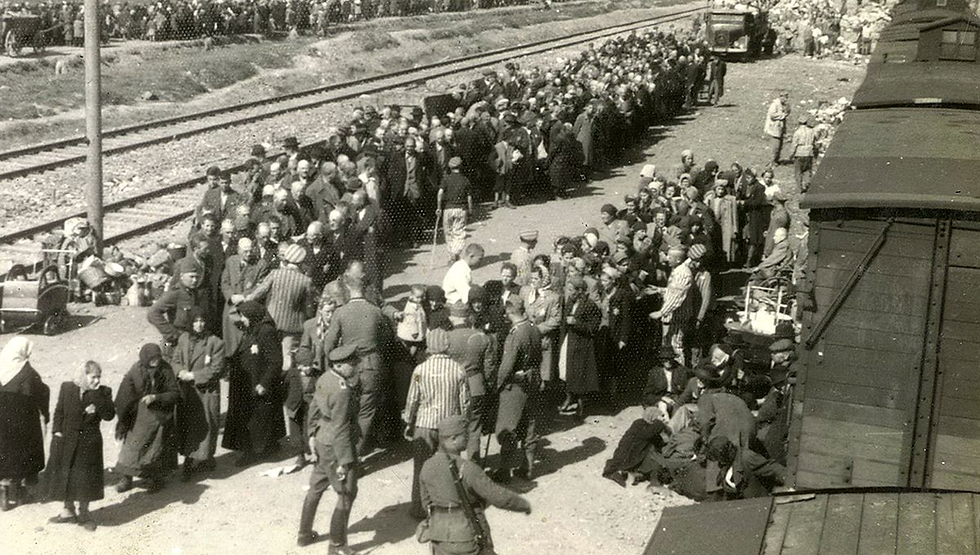
The Selection Process Of The Nazi’s
“The Nazis practiced ‘selection’ (Selektion), a brutal process in concentration camps like Auschwitz to separate Jews into those capable of forced labor and those to be immediately murdered in gas chambers. This systemic, cruel process determined survival based on physical capacity, while personal property and bodily materials (hair, gold teeth) were systematically looted.
The Selection Process (Selektion): Upon arrival at extermination camps, SS doctors (such as Josef Mengele) divided Jews into two groups: those fit for slave labor and those considered ‘unworthy of life’ (children, elderly, sick, or weak), who were sent immediately to gas chambers.
This process of selective killing, combined with the organized theft of all personal possessions, was a fundamental part of the Holocaust to maximize the utility of victims for the German war effort before their murder.”
In other words, if they did not benefit their ideology, their war effort, etc. then they were not worthy of life itself. Of course this was all fueled by the devil in his constant, futile effort to rid the earth of the Jewish people in particular whose redemption will bring to conclusion the Lord’s Divine purpose in the redemption of mankind (see Romans 11).
Eugenics And Nazi Racial Hygiene
Eugenics, or “racial hygiene,” was a scientific movement of the late nineteenth and early twentieth centuries. The following AI overview defines it for us:
“Eugenics is a set of beliefs and practices aimed at improving the genetic quality of the human population, often through selective breeding, forced sterilization, and restricting immigration. Developed in the late 19th century, it was popularized by Sir Francis Galton, applying ‘scientific’ principles to promote reproduction of the ‘fit’ (positive eugenics) and eliminate the ‘unfit’ (negative eugenics), frequently targeting minorities, the poor, and disabled individuals.”
Key Aspects of Eugenics:
Origin: Coined by Galton in 1883, based on misapplied theories of heredity and natural selection.
Negative Eugenics: Involves efforts to prevent breeding among those deemed “inferior” or “unfit”. This led to the sterilization of over 60,000 Americans by the 1970s, as highlighted in studies on eugenics and scientific racism.
Positive Eugenics: Encouraged, in theory, the increased reproduction of those perceived as genetically superior.
Scientific Racism: Eugenics was used to justify racism, anti-Semitism, and restrictive immigration laws based on the false belief that social traits were entirely hereditary.
Historical Impact: The movement influenced sterilization laws across the US (e.g., Buck v. Bell Supreme Court case) and was adopted in extreme forms by Nazi Germany, resulting in the genocide of millions.
“The ideology was widely discredited after WWII due to its association with Nazi atrocities, though it left a lasting legacy of injustice, as documented in resources like the US Holocaust Memorial Museum's entry on eugenics.”
The following article, “Eugenics,” explains the theories of eugenics, or “racial hygiene” that the devil used to shape many of Nazi Germany’s persecution strategies. Due to its significance, I copied the article in its entirety, adding my personal remarks in brackets.
Background
A significant number of Nazi persecutory policies stemmed from theories of racial hygiene, or eugenics. Such theories were prevalent among the international scientific community in the first decades of the twentieth century. The term “eugenics” (from the Greek for “good birth or stock”) was coined in 1883 by the English naturalist Sir Francis Galton [see definition right below]. The term's German counterpart, “racial hygiene” (Rassenhygiene), was first employed by German economist Alfred Ploetz in 1895. At the core of the movement’s belief system was the principle that human heredity was fixed and immutable.
[“A naturalist is any person who studies the natural world. Naturalists make observations of the relationships between organisms and their environments, as well as how those relationships change over time. One of the most well-known examples of a naturalist is Charles Darwin.”]
Eugenic Theories
For eugenicists, the social ills of modern society—criminality, mental illness, alcoholism, and even poverty—stemmed from hereditary factors. Supporters of eugenic theory did not believe that these problems resulted from environmental factors [rather than sin], such as the rapid industrialization and urbanization of the late 19th century in Europe and North America. Rather, they advanced the science of eugenics [rather than God] to address what they regarded as a decline in public health and morality.
Eugenicists had three primary objectives. First, they sought to discover “hereditary” traits that contributed to societal ills. Second, they aimed to develop biological solutions to these problems. Finally, eugenicists sought to campaign for public health measures to combat them. [None addressed the root issue within the heart, though.]
The International Impact of Eugenic Theories
Eugenics found its most radical interpretation in Germany, but its influence was by no means limited to that nation alone. Throughout the late nineteenth and early twentieth centuries, eugenic societies sprang up throughout most of the industrialized world. In Western Europe and the United States, the movement was embraced in the 1910s and 1920s. Most supporters in those places endorsed the objectives of American advocate Charles Davenport. Davenport advocated for the development of eugenics as “a science devoted to the improvement of the human race through better breeding.” Its supporters lobbied for “positive” eugenic efforts. They advocated for public policies that aimed to maintain physically, racially, and hereditarily “healthy” individuals. For example, they sought to provide marital counseling, motherhood training, and social welfare to “deserving” families. In doing so, eugenics supporters hoped to encourage “better” families to reproduce.
Efforts to support the “productive” members of society brought negative measures. For instance, there were efforts to redirect economic resources from the “less valuable” in order to provide for the “worthy.” Eugenicists also targeted the mentally ill and cognitively impaired. Many members of the eugenics community in Germany and the United States promoted strategies to marginalize segments of society with limited mental or social capacity. They promoted limiting their reproduction through voluntary or compulsory sterilization. Eugenicists argued that there was a direct link between diminished capacity and depravity, promiscuity, and criminality.
Members of the eugenic community in Germany and the US also viewed the racially “inferior” and poor as dangerous. Eugenicists maintained that such groups were tainted by deficiencies they inherited. They believed that these groups endangered the national community and financially burdened society.
More often than not eugenicists’ “scientifically-drawn” conclusions did little more than to incorporate popular prejudice. However, by employing “research” and “theory” to their efforts, eugenicists could assert their beliefs as scientific fact.
Nazi Racial Hygiene
German eugenics pursued a separate and terrible course after 1933. Before 1914, the German racial hygiene movement did not differ greatly from its British and American counterparts. The German eugenics community became more radical shortly after World War I. The war brought unprecedented carnage. In addition, Germany saw economic devastation in the years between World War I and World War II. These factors heightened the division between those considered hereditarily “valuable” and those considered “unproductive.” For instance, some believed that hereditarily “valuable” Germans had died on the battlefield, while the “unproductive” Germans institutionalized in prisons, hospitals, and welfare facilities remained behind. Such arguments resurfaced in the Weimar and early Nazi eras as a way to justify eugenic sterilization and a decrease in social services for the disabled and institutionalized.
By 1933, the theories of racial hygiene were embedded into the professional and public mindset. These theories influenced the thinking of Adolf Hitler and many of his followers. They embraced an ideology that blended racial antisemitism with eugenic theory. In doing so, the Hitler regime provided context and latitude for the implementation of eugenic measures in their most concrete and radical forms.
Racial hygiene shaped many of Nazi Germany’s racial policies. Medical professionals implemented many of these policies and targeted individuals the Nazis defined as “hereditarily ill”: those with mental, physical, or social disabilities. Nazis claimed these individuals placed both a genetic and a financial burden upon society and the state.
Nazi authorities resolved to intervene in the reproductive capacities of persons classified as “hereditarily ill.” One of the first eugenic measures they initiated was the 1933 Law for the Prevention of Offspring with Hereditary Diseases (“Hereditary Health Law”). The law mandated forcible sterilization for nine disabilities and disorders, including schizophrenia and “hereditary feeblemindedness.” As a result of the law, 400,000 Germans were ultimately sterilized in Nazi Germany. In addition, eugenic beliefs shaped Germany’s 1935 Marital Hygiene Law. This law prohibited the marriage of persons with “diseased, inferior, or dangerous genetic material” to “healthy” German “Aryans.”
Conclusion
Eugenic theory provided the basis for the “euthanasia” (T4) program. This clandestine program targeted disabled patients living in institutions throughout the German Reich for killing. An estimated 250,000 patients, the overwhelming majority of them German “Aryans,” fell victim to this clandestine killing operation.
Selective Harvesting In The Kingdom Of God
Whenever a human determines who is “worthy” or “unworthy” of life, such as is possible in the case of IVF, they have become as God, determining who is worthy of life, and who is worthy of death. Only God is all-knowing enough to decide, not only what physical and mental characteristics each human will be born with, but also who will live and who will die. Ultimately, it is in fact His divine criteria as revealed in the Bible that will determine who receives eternal life and who will not.
In Matthew 25:31-46, Jesus teaches us of the selective harvesting of souls that will occur when He comes “in His glory, and all the angels with Him,” seated on His glorious throne. He declared that He will gather the nations and will separate them from one another, “as the shepherd separates the sheep from the goats.” He will put the sheep on His right, and the goats on His left. The criteria, per Christ, for His selection is all in how we treat “the least of these.”
For comparing the natural world with the spiritual world, here are some facts regarding why a shepherd would separate the sheep from the goats;
“Shepherds separate sheep from goats due to distinct differences in behavior, nutritional needs, and management, often mixing them only for grazing before dividing them to prevent conflict. Goats are active browsers who may bully sheep, while sheep are grazers, making it necessary to manage their grazing, diet, and care separately.
Key Reasons for Separation [Look closely at what is highlighted, making comparisons to those in the church.]
Dietary and Grazing Habits: Goats prefer to browse on weeds, shrubs, and high leaves, while sheep graze on low grasses. Separating them allows better pasture management, as they compete for different food sources. [A spirit of competition between the two.]
Behavioral Differences: Goats are generally more curious, independent, and prone to escaping. They can also be aggressive toward sheep in tight, confined spaces. [Conflict between the two spirits.]
Disease and Health Management: Sheep and goats are susceptible to different parasites and diseases, such as scrapie. They also have different mineral needs; sheep are highly sensitive to copper, which is often found in goat feed.
Grazing Temperament: Goats can be aggressive, with bucks rearing up and rams ramming, potentially causing injury to each other. [More conflict between the two.]
Different Production Needs: Shepherds often separate them based on what they produce, such as wool or milk. [“You will know them by their fruits.”; Matthew 7:15-23, 12:33]
Cultural and Religious Context
The practice is famously referenced in the Bible (Matthew 25:31-46) as a metaphor for the final judgment, where sheep are presented as obedient “good” [the righteous] and goats as “bad” [the unrighteous]. The illustration stems from the practical reality that, while they can graze together, they require different care and behave differently [in particular, towards one another]…”
The Greek interpreted into English in Matthew 25:40, and 45 as “least” is elachistos (el-akh'-is-tos). It’s defined as “smallest, very little, least (in size, amount, dignity, etc.).” Of course, the way we treat those who are looked down upon as being “small” or “insignificant” in the eyes of some among society applies here, but the most vulnerable of all is a human fetus. They are definitely the smallest, in size, and in the most dangerous position because of the current practice of abortion and “selective reduction” within mankind. Jesus taught us that the selection of sheep and goats is based on their deeds (i.e. works) toward “the least of these.” It’s easy to claim to love Jesus, but the reality of our confession is revealed in whether or not we love others like Him. Jesus said, “By this all people will know that you are My disciples, if you have love for one another.” (John 13:35) It is the heart of sacrificial love for others that will be the basis for the Good Shepherd in determining the separation of the sheep from the goats.
The King of kings response to those on His right will be;
“Come, you who are blessed of My Father, inherit the kingdom prepared for you from the foundation of the world. For I was hungry, and you gave Me something to eat; I was thirsty, and you gave Me something to drink; I was a stranger, and you invited Me in; naked, and you clothed Me; I was sick, and you visited Me; I was in prison, and you came to Me.” Then the righteous will answer Him, “Lord, when did we see You hungry, and feed You, or thirsty, and give You something to drink? And when did we see You a stranger, and invite You in, or naked, and clothe You? When did we see You sick, or in prison, and come to You?” The King will answer and say to them, “Truly I say to you, to the extent that you did it to one of these brothers of Mine, even the least of them, you did it to Me.”
He will then say to those on His left;
“Depart from Me, accursed ones, into the eternal fire which has been prepared for the devil and his angels; for I was hungry, and you gave Me nothing to eat; I was thirsty, and you gave Me nothing to drink; I was a stranger, and you did not invite Me in; naked, and you did not clothe Me; sick, and in prison, and you did not visit Me.” Then they themselves also will answer, “Lord, when did we see You hungry, or thirsty, or a stranger, or naked, or sick, or in prison, and did not take care of You?” Then He will answer them, “Truly I say to you, to the extent that you did not do it to one of the least of these, you did not do it to Me.” These will go away into eternal punishment, but the righteous [“doers of the word”; Romans 2:13 and James 1:22] into eternal life.”
May the sheep of God’s pasture be granted enlightened eyes, before His imminent return, to see what the Spirit is saying to the church about His “selective harvesting” of souls. May we not be numbered with the goats because of our deeds in the final selection when we all stand before the King, Jesus Christ, and give an account.


Comments